
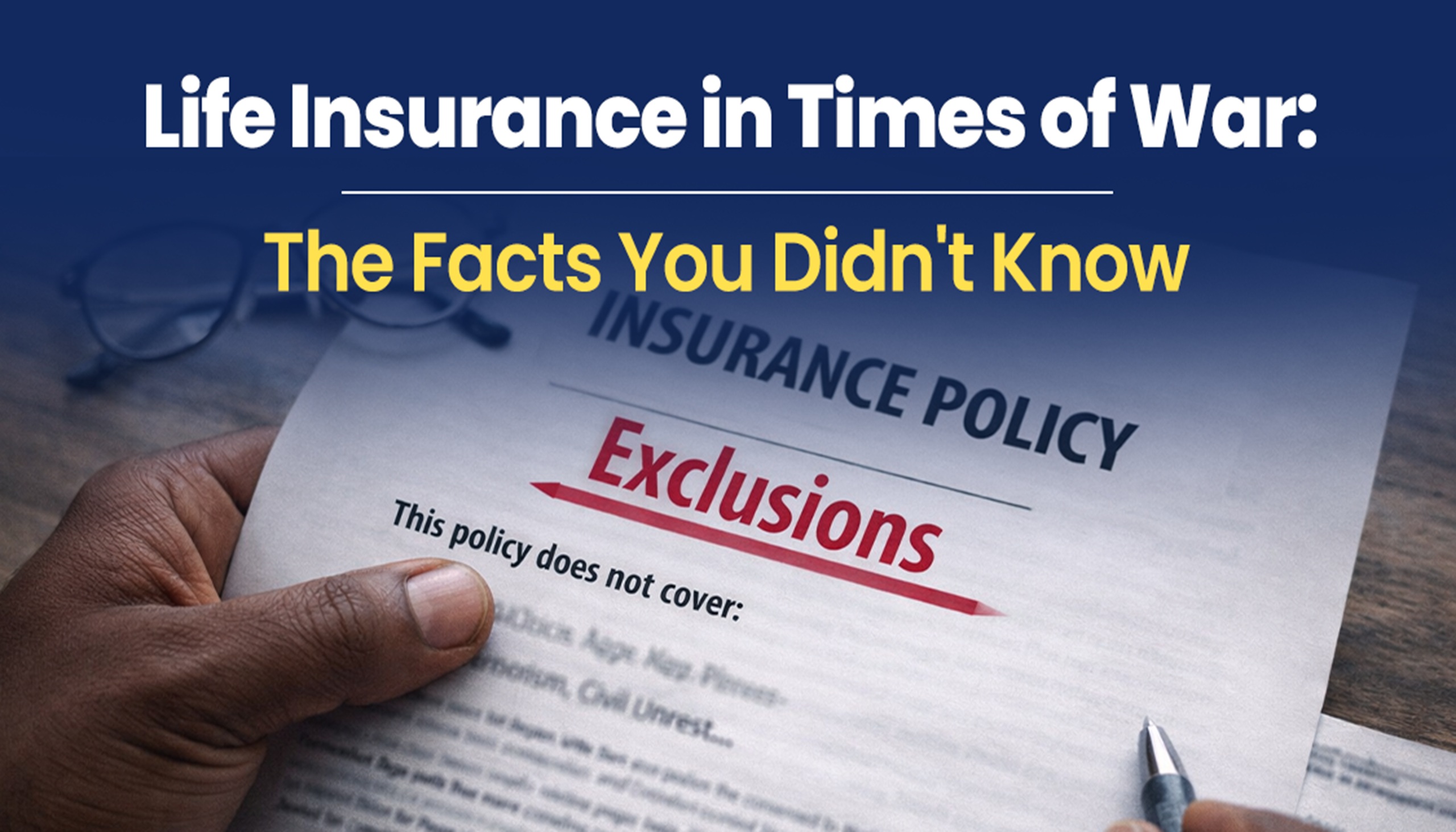
War Exclusions in Life Insurance: What Policyholders Should Know
Geopolitical tensions such as the Iran–America-Israel confrontation remind us that global conflicts can happen any time and escalate quickly. Such events raise an important question for policyholders: Would life insurance still pay if death occurs due to such a war?
It is a valid concern.
Generally, insurance companies are required to clearly disclose policy terms and conditions, including exclusions. An exclusion in an insurance policy is a specific condition, event, or circumstance for which the insurer will not provide coverage or pay a claim. In simple terms, it defines what the policy does not cover.
In many cases, life insurance policies include a war exclusion clause. This means insurers may not cover deaths resulting directly from war. So, active participation in war or armed conflict may also invalidate a claim. Life insurance providers exclude war from many policies because it presents a large, unpredictable risk they cannot easily estimate or manage.
This means that war can cause many deaths at the same time, and insurers cannot easily predict when it will happen, how big it will be, or how many claims they would need to pay. Because of this uncertainty, it is difficult for them to set fair premiums.
Not all policies are identical. The terms vary from insurer to insurer. In some rare instances, the policy may provide limited benefits or a refund of premiums instead of the full death benefit.
Stay informed today to prevent uncertainty tomorrow.